Top 5 reasons global businesses locate distribution operations in Jacksonville
- Home
- >
- Cargo Blog
- >
- Top 5 reasons global businesses locate distribution operations in Jacksonville

Written by: Sophia Prudencio
Real estate experts weigh in on the trends driving commercial warehousing growth
Jacksonville has emerged as one of Florida’s fastest-growing industrial markets as retailers, manufacturers, and logistics providers expand their distribution operations to meet growing consumer demand. The region’s industrial footprint has grown rapidly in recent years, positioning Jacksonville as a major hub for manufacturing, warehousing, and distribution serving Florida and the broader Southeast.
To better understand what’s driving that growth, we spoke with commercial real estate experts Colliers International Vice President Guy Preston and CBRE Industrial Advisory and Transaction Services Vice President Kyle Fisher about the trends shaping Jacksonville’s industrial market.
After several years of rapid warehouse construction, Jacksonville’s industrial market continues to see companies leasing new space while renewing existing facilities.
“We have about 8 million square feet of spec development that has been delivered in the past two years. Of that, 2 million has been leased,” said Preston.
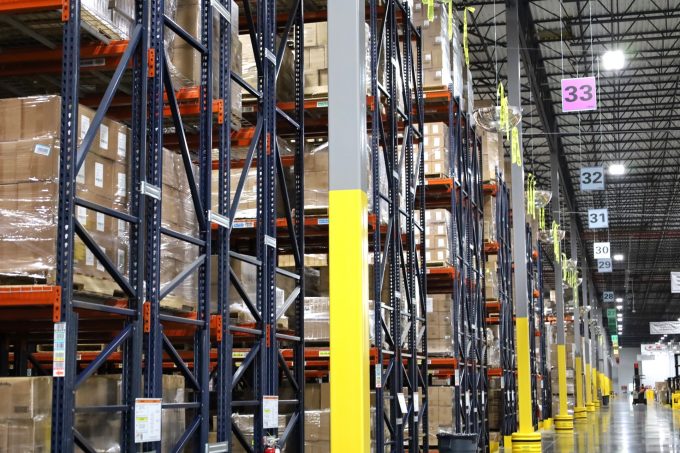
Speculative warehousing allows developers to build facilities before securing tenants, leaving approximately 6 million square feet of available spec industrial space currently on the market.
Fisher says leasing activity reflects a healthy market, with many companies choosing to remain in Jacksonville rather than scale back operations.
“Last year we saw about 48% new contracts and 52% renewals,” said Fisher. “From an overall market standpoint, a good takeaway was we did not see a lot of tenants give back space.”
Looking ahead, both experts expect Florida’s continued population growth to sustain demand for industrial space.
“Most people that are investing for the next 10 years believe that Florida will only continue to have increased population growth,” said Fisher. “I think you’ll see a lot of people selecting Jacksonville as their gateway to the Florida markets to hit same-day delivery.”
Those trends reflect a broader set of competitive advantages that continue attracting companies to Jacksonville. According to Preston and Fisher, five factors stand out as the biggest drivers of industrial and distribution growth.
1. Population growth
Florida is the nation’s third most populous state, and Jacksonville offers companies an efficient gateway to reach consumers. With the state’s population expected to grow to more than 28 million by 2040, businesses can position inventory closer to one of the country’s fastest-growing customer bases while improving delivery speed and supply chain efficiency.
2. Strategic location
Located at the northern gateway to Florida, Jacksonville offers companies convenient access to key consumer markets while maintaining strong connections to major transportation corridors. This strategic position allows businesses to efficiently serve both Florida and the broader Southeast.
More than 98 million U.S. consumers live within a one-day drive of JAXPORT, making Jacksonville an ideal location for regional distribution operations.
3. Transportation ecosystem
Jacksonville’s transportation network strengthens its position as a logistics hub. Two major interstate highways intersect near downtown, with I-95 connecting Maine to Miami and I-10 linking the East and West coasts. I-75, connected to I-10, also connects Jacksonville to the southwest coast of Florida.
On the rail side, Jacksonville is served by CSX, Norfolk Southern, and Florida East Coast Railway. JAXPORT also operates its own Intermodal Container Transfer Facility (ICTF), providing efficient rail connections between its largest cargo terminals and inland destinations throughout the Southeast.
Jacksonville’s location and multimodal transportation network can help companies reduce overall supply chain costs, particularly when serving markets from Orlando to Atlanta.
4. Modern seaport with global connectivity
Those transportation advantages become even more valuable when paired with Jacksonville’s deepwater seaport, giving companies seamless access to both domestic and international markets.
As Florida’s largest container port, JAXPORT connects businesses to 140 ports in more than 70 countries through a network of ocean carrier services. Ongoing investments—including the 47-foot harbor, terminal modernizations, new cranes, expanded carrier services, and improved air draft clearance—continue to strengthen Jacksonville’s position as a global logistics gateway. Once the Blount Island overhead power line project is complete, the port will accommodate vessels carrying up to 18,000 TEUs.
“Majority of tenants, whether they are directly or indirectly impacted by port operations, have a provider that is,” said Fisher. “I think that JAXPORT is a big driving factor directly or indirectly for a lot of tenants that are here.”
5. Skilled workforce
Access to a reliable workforce is often one of the most important factors in corporate site selection, and Jacksonville continues to strengthen its talent pipeline.
The region’s labor force of more than 881,000 workers is supported by colleges, universities, and major military installations that help prepare talent for manufacturing, transportation, and logistics careers.
“The naval presence and retaining a lot of the people who stick around Jacksonville for skilled labor has been a huge win—very good for the city,” said Fisher. “Compared to other cities, labor will become a driving factor on site selection.”
Preston added that Jacksonville’s competitive labor costs can also make a significant difference for companies hiring large workforces.
Why Jacksonville’s Momentum Continues
From a growing labor force and expanding industrial inventory to the advantages provided by JAXPORT, Jacksonville continues to check many of the boxes companies consider when making location decisions. As Florida’s population continues to grow and demand for faster delivery increases, commercial real estate experts expect Jacksonville to remain one of the Southeast’s leading destinations for industrial and logistics investment. For companies building supply chains designed for long-term growth, Jacksonville offers the infrastructure, connectivity, and market access needed to compete.