America at 250: Jacksonville’s rise as a leading U.S. maritime gateway
- Home
- >
- Cargo Blog
- >
- America at 250: Jacksonville’s rise as a leading U.S. maritime gateway

Written By Marcia Pledger
As America prepares to celebrate 250 years of independence, Jacksonville’s connection to the nation’s maritime history stretches back even further. More than two centuries before the United States was founded, Northeast Florida served as a natural gateway connecting people, commerce and cultures.
Jacksonville’s maritime roots extend to the 16th century, when French explorer Jean Ribault entered what is now the St. Johns River in 1562. Three years later, English traders exchanged goods with the French colony at Fort Caroline in what is recognized as the first documented act of international waterborne commerce in the New World, giving Jacksonville its distinction as America’s First Port.
Early encounters by European explorers highlighted the river’s importance as a natural harbor and set the stage for centuries of maritime commerce. The United States established Jacksonville as a port of entry in 1822. As Florida’s economy grew during the nineteenth century, the St. Johns River emerged as a vital commercial gateway for timber, cotton, pine products such as turpentine and tar, and other commodities. Steamships followed, railroads connected to the docks, and the military increasingly depended on Jacksonville’s strategic location.
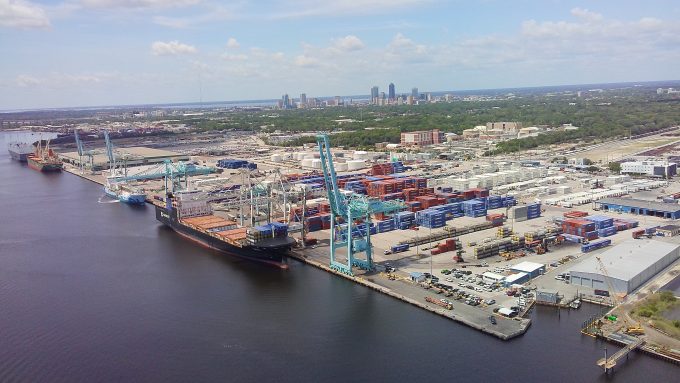
But geography alone didn’t create today’s port. Jacksonville became a maritime powerhouse through generations of engineering, public investment and civic leadership that transformed the River City into one of America’s leading gateways for global trade.