How a seaport drives local economic opportunity
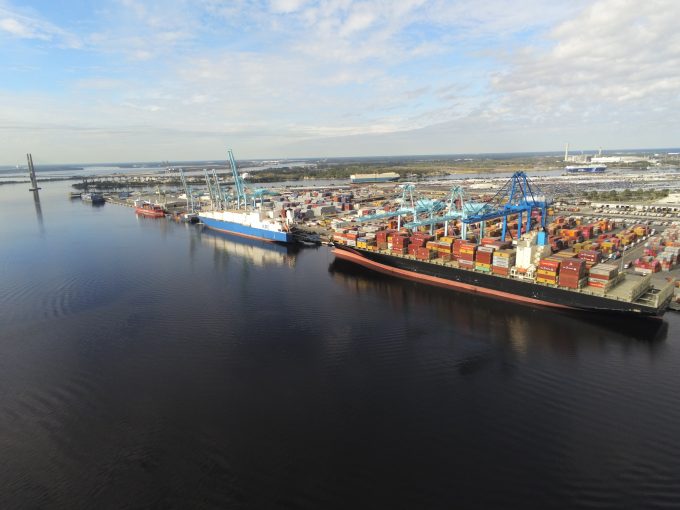
JAXPORT's Blount Island
May 22, 2026 | Cargo Blog
3 MIN READ

Writer

By Marcia Pledger

A seaport helps create economic opportunity by connecting local businesses to global markets. Through the movement of goods by ship, rail and truck, ports support supply chains that allow companies to import materials, export products and expand into new markets.

In Jacksonville, that role is served by JAXPORT, which operates a strategically located seaport for trade with major markets including Latin America, the Caribbean, Asia and Europe.

The region’s growing population and logistics network have strengthened Jacksonville’s position as a distribution and manufacturing hub. More than 100 new residents move to Northeast Florida each day, according to the U.S. Census Bureau.
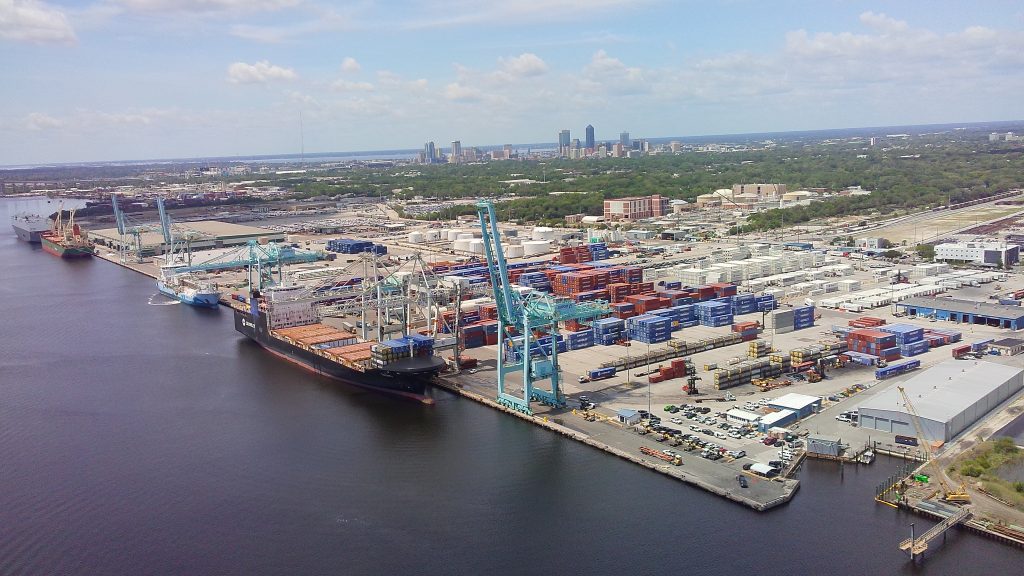

JAXPORT's Talleyrand Marine Terminal

At the same time, economic development activity across the region continues to support business expansion. Since 2019, JAXUSA Partnership has helped more than 100 companies relocate or expand in Northeast Florida, resulting in more than 17,000 new direct jobs and $6.2 billion in capital investment.

For many industries, access to a seaport is an important factor in site selection, as it enables efficient movement of raw materials and finished goods through global supply chains.

Port activity also supports job creation and business growth by connecting local industries to international markets.

Aundra Wallace President JAXUSA Partnership

“By connecting regional companies to international markets, the port enables exports, attracts new employers and supports long-term economic growth beyond the region,” said Aundra Wallace, president of JAXUSA Partnership.

JAXPORT’s trade lanes and carrier partnerships expand access to global markets for a wide range of industries across Northeast Florida.

Infrastructure investments — including harbor deepening, modernized terminals, expanded rail access and increasing the air draft clearance — are designed to support larger vessels and increased cargo volumes.

Cargo activity through Jacksonville’s seaport supports more than 258,800 jobs in Florida and contributes an estimated $44 billion in annual economic output, according to regional data.

“Increased port activity will continue to drive demand for distribution centers, manufacturing and value-added logistics services in the region,” Wallace said.

Private investment and development

Access to global shipping routes influences private investment decisions, as companies locate facilities near transportation and logistics infrastructure. Recent examples include Sam’s Club’s distribution facility serving 25 retail locations in the Southeast U.S. and Puerto Rico, and Primark’s 550,000-square-foot distribution center supporting its U.S. expansion.

Other companies continue to choose Jacksonville for its port access and connectivity. The Terminal Corporation (right) opened a 255,000-square-foot warehouse near Blount Island and Dames Point in 2024.

The Terminal Corporation warehouse in Jacksonville, Florida
Frida's first warehouse in Jacksonville

Industrial investment has also expanded, including Frida (left), which doubled its Jacksonville distribution operations footprint.

Additionally, Anderson-DuBose Company’s $60 million distribution center serves more than 300 restaurants across the Southeast.

According to JAXUSA Partnership, 11 projects announced over the past two years — about 40 percent of the total — are expected to use JAXPORT for operations. Those projects represent more than 1,000 direct jobs, over $500 million in capital investment and an estimated 1,700 indirect jobs.

Workforce and long-term opportunity

A key focus for the region is attracting and developing skilled talent to support continued growth in logistics, manufacturing and transportation.

The region benefits from multiple education and workforce training pathways, and collaboration between employers and education leaders continues to strengthen alignment with industry needs.

With strong infrastructure, a growing economy and ongoing investment in workforce development, Jacksonville is well positioned to support continued growth in trade and logistics in the years ahead.

ILA Local 1408 member operates a crane during container operations