Local educators explore maritime careers during workforce development summit at JAXPORT
  • Home
  • >
  • Cargo Blog
  • >
  • Local educators explore maritime careers during workforce development summit at JAXPORT

Jul 31, 2026 | Cargo Blog
4 MIN READ

Written by: Sophia Prudencio

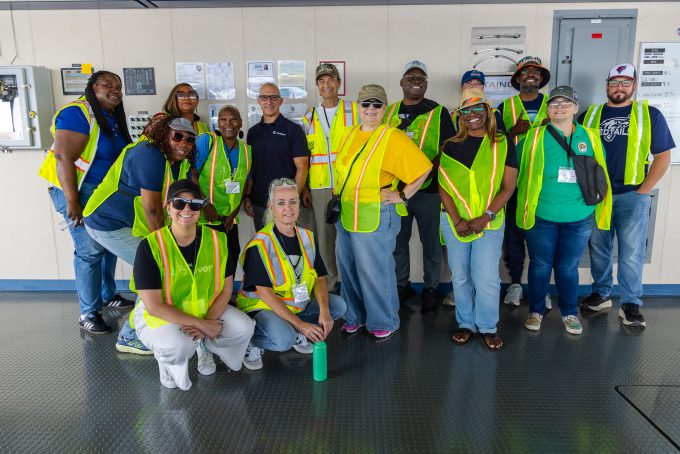
The future of Northeast Florida’s maritime workforce starts long before students enter the job market. To help educators introduce those opportunities in the classroom, JAXPORT recently welcomed local instructors from Duval County Public Schools (DCPS) and Florida State College at Jacksonville (FSCJ) to the port’s headquarters and Talleyrand Marine Terminal for an inside look at the maritime, transportation and logistics industries.

“It’s not every day you get to speak one-on-one with industry leaders and professionals,” said Neil Schreiber, a Professor of Accounting and Business and Director for the Center for Economic and Financial Education at FSCJ. “Their perspectives helped instill a better understanding of port operations,”

“When we came to JAXPORT, I was amazed. It was an eye-opener,” said Dr. April Slade, Director of Social Studies, K–12 for DCPS.

Coordinated in partnership with Crowley and the Federal Reserve Bank of Atlanta, the visit connected educators with industry professionals through presentations, discussions, and a guided tour of JAXPORT’s facilities. The goal was to increase awareness of the many maritime careers that these educators can share with their students.

“Once we took the tour, the teachers were able to learn how cargo moves and talk to people in the field,” Dr. Slade said. “Teachers were able to place what they see into action. Teachers spoke highly of it.”

Throughout the day, JAXPORT and Crowley highlighted the wide range of careers available across the port industry while helping educators better understand the skills, training and educational pathways that prepare students for those roles.

Dr. Slade oversees Kindergarten through 12th grade social studies curriculum and said logistics concepts will be incorporated into classroom lessons as students learn about the economy and the supply chain’s economic impact. This fall also marks the launch of Duval County’s first merchant mariner Career and Technical Education program at First Coast High School.

“Teachers will be able to take the knowledge of what they saw and create lessons from it,” Dr. Slade said. “The goal is to get the background of logistics and supply chain in all schools.”

Those classroom connections reflect the vast opportunities available throughout the port industry. As Florida’s largest container port, JAXPORT’s three marine terminals—Talleyrand, Blount Island, and Dames Point—support nearly 30,000 jobs in the maritime, transportation, and related industries throughout Northeast Florida. Career opportunities range from crane technicians, welders, and mechanics to positions in finance, business development, engineering, and other professional fields.

“This is a career that offers stability for our students,” said Schreiber. “Bringing what we learned back to students at both the high school and college level is important. I have students who don’t know what they want to do and I can now recommend JAXPORT to them.”

That exposure is important because many students, and even educators, may not realize how broad the maritime industry really is. While many people associate maritime careers with working aboard ships, industry leaders emphasized that the sector offers opportunities far beyond the waterfront.

“There is a misconception that maritime work is just on the ships, but there are a lot of back-office jobs that contribute to the everyday operations of the port,” said Crowley Chief of Staff Patrick Tamasitis.

Tamasitis explained that port operations extend well beyond the terminal, relying on professionals in administration, sales, finance, and other business functions that are essential to keeping cargo moving efficiently. By giving teachers a firsthand look at those roles, organizers hope they can introduce students to careers they otherwise may not have considered.

“College is not for everyone,” Tamasitis said. “There are plenty of skilled trade and technical careers that can provide strong wages and long-term opportunities.”

As demand for skilled workers continues to grow, partnerships between education and the maritime industry are helping prepare the next generation. With a strong network of educational institutions and trade programs, Jacksonville is well positioned to support the industry’s future workforce.