PORTS OF THE FUTURE: How supply chain reliability and resilience will serve Jacksonville’s manufacturing industry
- Home
- >
- Cargo Blog
- >
- PORTS OF THE FUTURE: How supply chain reliability and resilience will serve Jacksonville’s manufacturing industry
As seen in Manufacturing on the First Coast 2026-2027
Manufacturers planning for the future face a growing list of factors that influence how goods move to and from their facilities.
Jacksonville offers several competitive advantages, including a growing industrial market, a skilled workforce, and direct access to an international seaport. Together, those strengths help manufacturers efficiently import raw materials and components, export finished products and reach customers around the world.
As global supply chains become more complex, manufacturers increasingly depend on logistics partners that provide reliable service and adapt to changing market conditions.
Supply chain uncertainty is the new normal
Before 2020, businesses generally planned around the assumption that global trade would remain relatively stable. Today, geopolitical conflict, changing trade policies, transportation bottlenecks, and energy market volatility have become recurring realities rather than isolated events.
That shift has changed what manufacturers expect from their logistics partners. Companies increasingly value reliability, operational efficiency, responsive customer service, and access to strong consumer and industrial markets. They need partners that can help them navigate uncertainty—not simply move products.
For JAXPORT, that means pairing world-class infrastructure with the consistent service manufacturers need to keep supply chains moving.
Planning for the future
Delivering that resilience requires long-term planning. JAXPORT terminals look different today than they did just a year ago because each improvement is part of a long-term strategy to strengthen the port’s ability to serve manufacturers and other customers.
The port’s diversified business model supports continuous growth across containerized cargo, vehicles, and breakbulk, helping create opportunities across multiple industries while strengthening Northeast Florida’s economy.
Rather than resetting every five years, JAXPORT’s strategic plans build on one another to support disciplined decision-making, thoughtful investments, and a long-term focus.
Investments that benefit manufacturers
Over the past five years, more than $3.1 billion has been invested in Northeast Florida’s transportation network, including roadways, rail, and port infrastructure.
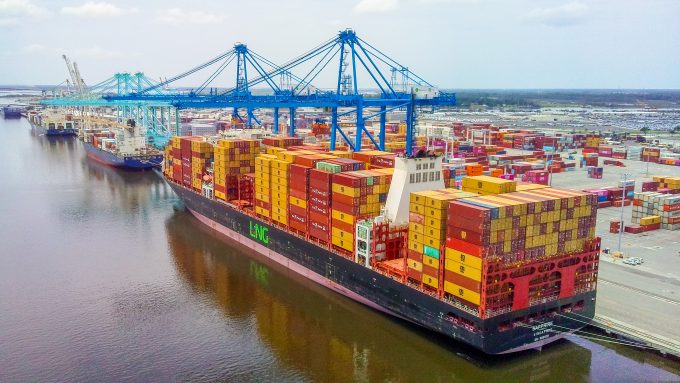
For JAXPORT, projects including the 47-foot harbor deepening, increased air draft for larger vessels, Blount Island container terminal modernization, berth expansion, and new cargo-handling equipment have strengthened Jacksonville’s position as one of the most capable and efficient port cities on the U.S. East Coast.
These investments, combined with the continued commitment of the port’s terminal operators and other partners, provide manufacturers with greater connectivity, efficiency, and reliability throughout the supply chain.
Continuously modernizing
Like many companies, JAXPORT is also exploring emerging technologies, including artificial intelligence, to improve operational efficiency and support smarter decision-making across the port ecosystem.
JAXPORT was the first port in Florida to engage in a year-long pilot program with the Florida Department of Transportation and GenLogs, a freight intelligence platform. Through this partnership, the platform provides enhanced visibility into cargo movement, helping improve freight flow and supporting more informed transportation planning.
GenLogs uses data from thousands of roadside sensors and cameras nationwide to provide near real-time visibility into truck movements. Those insights help transportation agencies better understand freight patterns so future infrastructure investments can better align with how freight actually moves.
As ports continue integrating advanced technologies, tools like GenLogs provide greater visibility across the supply chain while helping terminal operators, transportation agencies, and other partners make more informed operational decisions.
JAXPORT has also deployed Genetec, an electronic gate access system that scans Transportation Worker Identification Credential (TWIC) cards entering the port. The technology strengthens security by digitally verifying credentials while also streamlining access for authorized users. Together, these investments demonstrate how better data can support a more efficient, secure port ecosystem.
By combining modern infrastructure with innovative technology and a long-term commitment to reliability, JAXPORT is helping manufacturers build more resilient supply chains and remain competitive in an increasingly complex global marketplace.